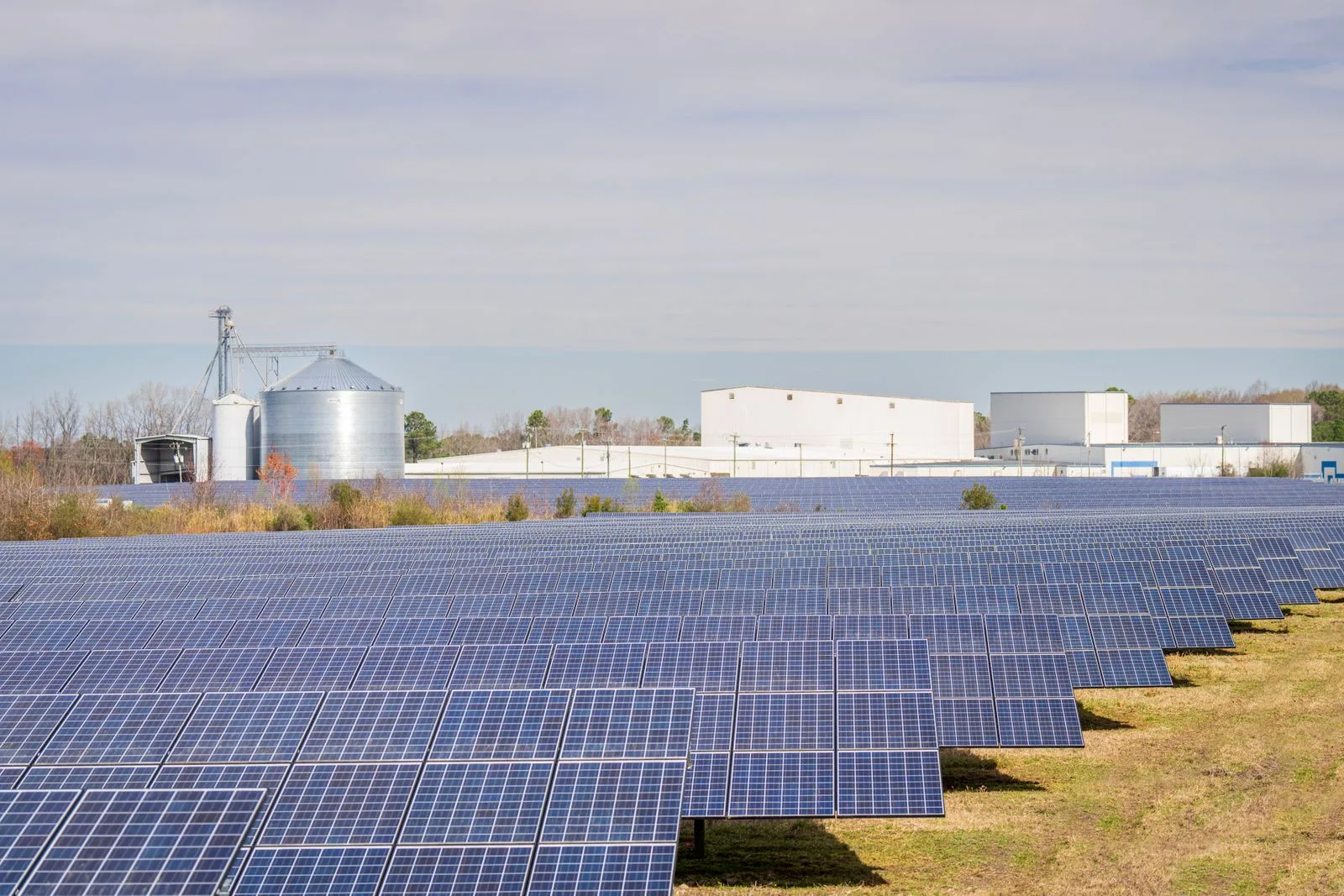
Canadian weather is tough on solar panels. Snow, pollen, dust, and bird droppings slash efficiency. Drone cleaning restores peak output in hours.
The physics of dirty panels
Photovoltaic output is a direct function of light reaching the cell. Soiling — dust, pollen, bird droppings, agricultural particulate, wildfire ash — absorbs and scatters that light before it arrives. Studies across North American installations consistently measure 15 to 25 percent annual output loss on uncleaned arrays, with single-event losses far higher: one week of prairie field work upwind can drop a Saskatchewan array 8 percent; a bird colony can zero out individual strings. The loss is invisible on a sunny day and merciless in the production data.
Why rain does not clean panels
Rain rinses loose dust but leaves the bonded layer — and in dry climates it makes things worse, wetting particulate into a cemented film at panel edges and frames. Hard-water rain in much of Canada also deposits its own minerals. The only thing that restores full transmissivity is deliberate cleaning with the right water chemistry: deionized water that dissolves and lifts deposits without adding new ones, applied with soft-wash pressure that respects the anti-reflective coating.
What drone cleaning does differently
Manual solar cleaning means crews walking racking rows with brushes, or lifts creeping along rooftop arrays — slow, labour-heavy, and hard on both panels and membranes. Drones soft-wash from above: no weight on the racking, no boots on the roof, no brush micro-scratching. A crew of two cleans thousands of panels per day. For rooftop commercial arrays, the entire job happens without roof access, which for many buildings means without a permit, a harness plan, or a membrane-damage waiver.
Reading your soiling data
Modern inverters and SCADA systems already measure what soiling costs you: compare actual output against irradiance-modelled expected output, and the gap is your soiling derate. We set cleaning triggers on that number, not on the calendar. When recovered production exceeds cleaning cost — typically at 4 to 6 percent derate for commercial rates — the clean pays for itself before the invoice clears. Post-clean telemetry closes the loop, documenting the recovery in kilowatt-hours.
Canadian seasonal strategy
Two cleans anchor most Canadian programs: early June, after pollen and seeding dust, entering peak irradiance months when every percent matters most; and October, clearing harvest dust and organic debris before snow. Sites near gravel roads, quarries, or active agriculture often justify a third mid-summer clean. Snow itself is a separate service — panel-safe removal after major events recovers days of winter production that would otherwise wait for melt.
The asset-management view
A solar array is a yield instrument. Soiling is a controllable operating loss, and cleaning is among the few O&M actions with directly measurable return. Institutional owners increasingly write soiling thresholds into O&M contracts; we deliver against them with per-visit production evidence. Clean panels are not cosmetic — they are basis points.
Key takeaways
Soiling is a measurable, controllable operating loss — typically 15 to 25 percent annually on uncleaned Canadian arrays — and rain does not fix it. Deionized-water soft-washing restores transmissivity without scratching coatings or loading racking, and drones deliver it at a speed and price that make data-triggered cleaning practical. Set the trigger from your SCADA soiling derate, not the calendar; clean in June and October as the baseline; and demand before-and-after production telemetry as deliverables. Treat panel cleaning as yield management rather than housekeeping and the economics resolve themselves: recovered kilowatt-hours pay the invoice, and the inspection imagery from the same flights closes out O&M line items you were paying separately to address.