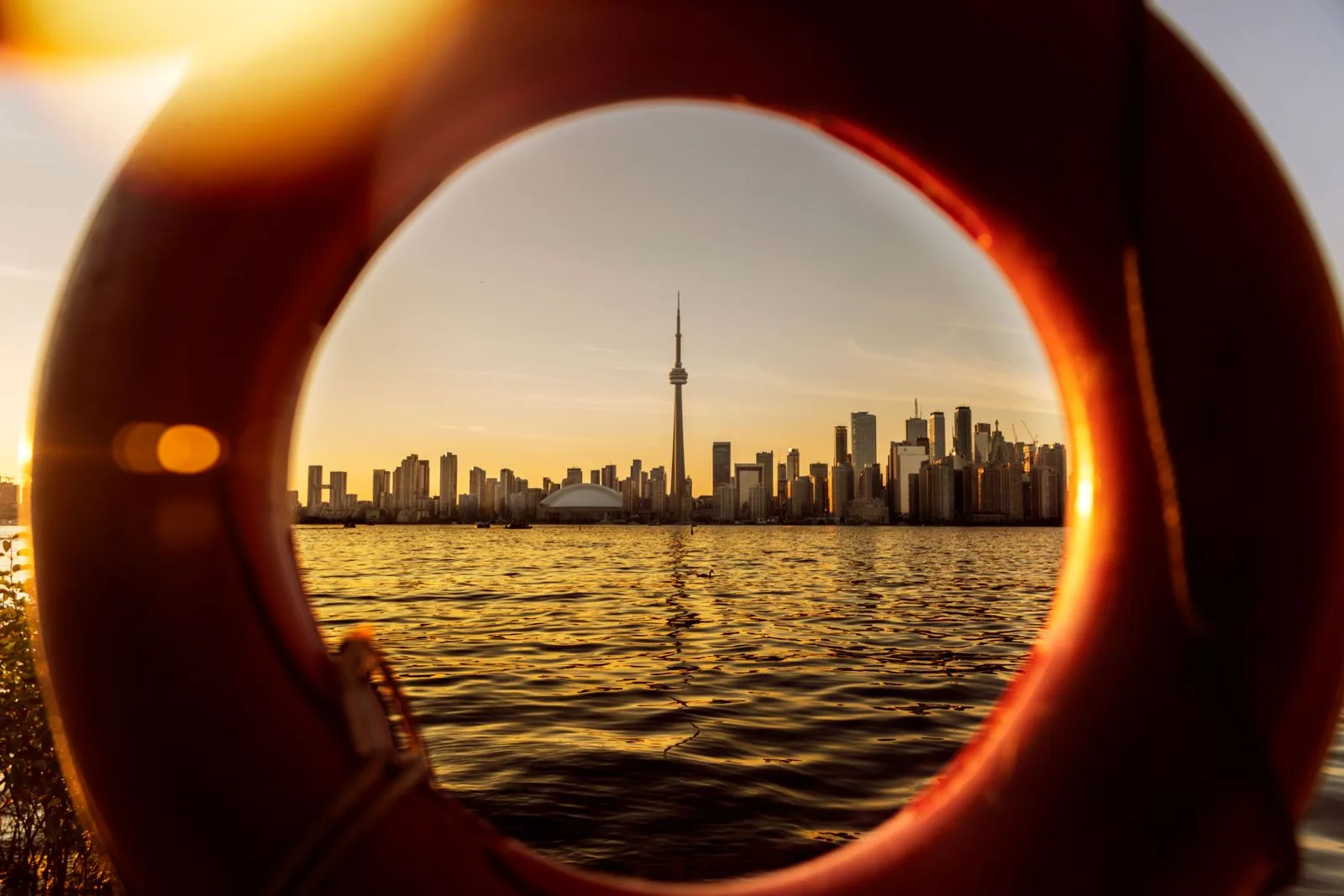
A Harbourfront condo board switched from traditional rope access to drone cleaning and cut costs by 58% while completing the job 4x faster.
The building and the problem
A 45-storey residential tower in Toronto's CityPlace: 2,100 exterior panes, full-height balcony glass on three elevations, and a board that had deferred exterior cleaning for two years because the last swing-stage quote came in at $58,000 with a four-week schedule and a long list of balcony-access conditions. Salt film from two winters had built to the point where units facing the Gardiner reported visibly grey daylight. The property manager approached us for a comparison quote.
The proposal
Full-envelope purified-water clean — all glass, spandrels, and balcony exteriors — by drone: $21,500, six working days, no roof rigging, no balcony access required, no sidewalk hoarding. The board's engineering consultant reviewed our RPAS certificates, insurance, NAV CANADA authorization for the Billy Bishop control zone, and the flight plan; approval took one meeting instead of the previous project's three.
Execution week
Mapping flight on day one built the envelope model and flagged forty-one balconies with furniture or planters overhanging the glass line — each got a door-notice for the following day rather than a blanket building-wide restriction. Cleaning ran days two through six, top-down, two battery cycles per elevation section, with the operator repositioning the ground station three times around the podium. Wind grounded exactly four hours across the week — hours, not the days a stage crew loses. Residents' most common report to the front desk was that they had not realized the work was happening.
Results, measured
Post-clean inspection footage confirmed 100 percent pane coverage with eleven re-cleaned spots flagged automatically by the vision system. The footage also documented three failed insulated glass units and a corroded spandrel clip — repairs the board scheduled proactively at quotes far below emergency pricing. Total cost came in at 37 percent of the swing-stage quote, and the schedule at roughly a quarter of the time.
What the board did next
With the price of cleaning cut by nearly two-thirds, the board moved from reactive to programmatic: twice-yearly cleans on a standing contract, spring and fall, with the envelope model on file making each subsequent visit faster. The reserve-fund line item for exterior cleaning dropped even as frequency doubled. The building's realtor association noted it too — listings now photograph the glass, not the grime.
The transferable lesson
Nothing in this project was unique to one tower. Every Canadian high-rise board deferring exterior cleaning over cost is running the same math with the old numbers. The technology swap changes the inputs: same clean, same insurance-grade documentation, a third of the price, a quarter of the schedule. That is the whole case study.
Key takeaways
One tower, one comparison: $21,500 and six days by drone against $58,000 and four weeks by swing stage, with balcony access eliminated as an issue and three latent envelope defects discovered in the inspection footage. The board's real win was structural — cutting the per-clean price let them double frequency while shrinking the reserve line, and the persistent envelope model makes every future clean cheaper still. Nothing about the outcome depended on the building being special. Any Canadian high-rise board holding a five-figure swing-stage quote can run the same comparison, and most will find the same arithmetic: a third of the price, a quarter of the schedule, and documentation the old method never produced.